

Every Grand Slam season produces a storyline that pulls in casual fans and hardcore tennis followers alike, and in 2026 that storyline belongs to Carlos Alcaraz. The Spaniard walks into Flushing Meadows as the defending US Open champion, but the path back to Arthur Ashe Stadium has not been simple. A wrist injury kept him off tour for roughly four months, and his return has been watched as closely as any match result this year.
For sports fans who track every twist of the ATP calendar, Alcaraz’s comeback is a case study in how modern tennis careers are managed. It also gives content creators, fantasy sports enthusiasts, and platforms like Cricbet99 a genuinely compelling narrative to build coverage around, since match previews and player-form analysis are exactly the kind of content that keeps sports audiences engaged year-round.
A Wrist Injury That Changed the Season
Alcaraz’s absence from the tour began in the spring, and it reshaped the entire men’s draw for several months. Without their two biggest young stars sharing the same stage regularly, tournament organizers and broadcasters had to lean on a wider cast of contenders. Jannik Sinner’s own injury troubles compounded the situation, meaning the anticipated rivalry between the two never fully materialized during the mid-season hard-court swing.
What makes Alcaraz’s situation notable is how he chose to manage his return. Rather than rushing back for a single marquee event, his team prioritized a structured build-up through lower-pressure matches before committing to the US Open. That patience reflects a broader trend in elite tennis: players increasingly treat the body as the primary asset to protect, even at the cost of ranking points or short-term prize money. Fans following his recovery through official ATP updates and fitness reports got an unusually transparent look at how a top-five player rehabilitates a wrist issue that could easily have lingered into the following season.
Defending a Major Title Under Pressure
Defending any Grand Slam title is difficult. Defending one after a four-month layoff adds a layer of difficulty that few players have successfully navigated in the Open Era. History shows that even dominant champions often stumble in their first tournament back from a significant injury, simply because match fitness cannot be replicated in practice sessions alone.
Alcaraz enters the 2026 US Open without the benefit of a deep warm-up run through Montreal or Cincinnati, the two North American hard-court tournaments that typically sharpen a player’s timing before Flushing Meadows. That absence puts extra weight on his opening rounds, where lower-ranked opponents with nothing to lose often play their most fearless tennis. For anyone following the draw closely on Cricbet99 or similar sports-tracking platforms, the first week becomes just as important to watch as the semifinals.
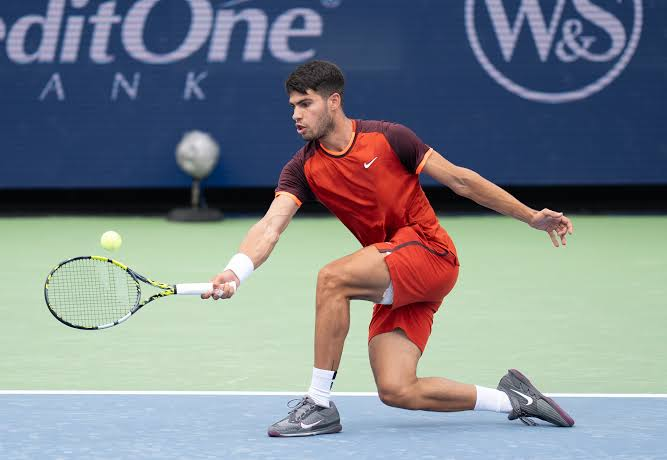
His game style also plays into the storyline. Alcaraz relies heavily on explosive lateral movement, drop shots, and rapid direction changes — all of which place significant strain on the wrists and forearms. A full return to that style, without hesitation or compensation in his shot selection, will be one of the clearest signs of whether the injury is genuinely behind him.
The Absence of Sinner and What It Means for the Draw
One of the more unusual aspects of the 2026 US Open is the absence of world number one Jannik Sinner, who withdrew after failing to recover from a knee injury sustained around Wimbledon. Sinner’s own hard-court warm-up events were scrapped, and his absence removes the marquee “Sincaraz” matchup that fans had hoped to see in New York.
This changes the competitive picture significantly. With the top seed missing, the men’s draw opens up for players like Alexander Zverev, and it places even more scrutiny on Alcaraz as the highest-profile contender still in the field. Sports content platforms and fan communities that track ranking implications — including the kind of match-by-match breakdowns you’ll find referenced on Cricbet99 — have flagged this as one of the most wide-open US Open draws in recent memory precisely because the presumptive favorite isn’t in it.
Serena Williams and the Mixed Doubles Subplot
Alcaraz’s tournament isn’t limited to singles. He also paired with Serena Williams for mixed doubles, a pairing that generated enormous attention purely on star power. Williams, who returned to tennis in June after nearly four years away from competition, brought a level of media attention to the mixed doubles draw that the event rarely receives. The duo’s run ended against Cobolli and his partner, but the pairing itself became one of the most talked-about storylines of the tournament’s opening days.
For a player managing a comeback from injury, adding a doubles commitment alongside a legend of the sport is an interesting choice. It suggests confidence in his physical readiness, even as questions remain about his singles form heading into the second week.
What a Deep Run Would Mean
If Alcaraz reaches the second week healthy and moving freely, it validates the cautious approach his team took throughout the recovery process. A deep run — quarterfinals or beyond — would also reinforce his position as the sport’s most bankable young star heading into the ATP Finals in Turin later this year.
Fans who like to follow storylines match by match often turn to score trackers and community discussion boards to stay updated between broadcast windows. Whether you’re checking scores on your phone during work hours or catching highlights in the evening, tools like Cricbet99 make it easier to stay looped into live updates without needing to sit through every set. That kind of accessibility has become a standard expectation for sports fans in 2026, particularly during a tournament as unpredictable as this year’s US Open.
Lessons From Past Injury Comebacks in Men’s Tennis
Alcaraz’s situation isn’t without precedent. Tennis history is full of examples where top players returned from extended layoffs with mixed results in their opening tournaments back. Some, like Rafael Nadal in various points of his career, managed to win majors almost immediately after returning from injury, relying on years of accumulated match experience to compensate for lost court time. Others needed several tournaments to rediscover their rhythm, treating their comeback event more as a fitness test than a genuine title bid.
What separates these outcomes usually comes down to the nature of the injury itself. A wrist problem, in particular, tends to affect shot confidence in a way that lower-body injuries often don’t — players can subconsciously alter their grip pressure or swing path to protect a healing joint, which changes shot quality even after the underlying injury has technically resolved. Coaches and physiotherapists working with Alcaraz’s team have reportedly focused heavily on this exact issue, making sure his groundstroke mechanics haven’t shifted defensively during the recovery process.
For fans trying to gauge how serious a title threat he remains, watching his first few matches for any hesitation on backhand slices or two-handed backhand returns — shots that place particular strain on the wrist — will likely tell the story more clearly than the scoreline itself.
The Mental Side of a Comeback Under a Title Defense
There’s also a psychological dimension that’s easy to overlook when discussing injury recoveries purely in physical terms. Alcaraz isn’t just returning to competition — he’s returning as a defending Grand Slam champion, which means every match carries expectations that a standard comeback tournament wouldn’t. Lower-ranked opponents in the early rounds have little to lose and every incentive to play loose, aggressive tennis against a champion whose match sharpness is still an open question.
Managing that pressure while also managing physical uncertainty is a difficult combination. Players in this position often talk about needing to separate the outcome of individual points from any lingering physical doubt, a mental skill that’s honestly harder to coach than most technical adjustments. How Alcaraz handles a tight third set against an unseeded opponent in the first week may reveal more about his readiness than a routine straight-sets win would.
What Coaches and Analysts Are Watching For
Beyond the general storylines, tennis analysts breaking down Alcaraz’s draw have pointed to a handful of specific indicators worth tracking through the tournament. First-serve percentage under pressure, particularly in the middle of long service games, tends to reveal fatigue or hesitation before it shows up anywhere else in a player’s game. Movement efficiency during extended rallies — whether he’s taking the most direct path to the ball or over-committing early to protect the wrist — is another closely watched metric among those studying his return match by match.
For fans who enjoy this level of detail rather than just following the final scoreline, live match trackers and stat breakdowns available through platforms like Cricbet offer a way to follow these deeper patterns without needing professional broadcast analysis. Small signals in the data often surface trends before they become obvious in the score itself, which is part of why detailed match tracking has become such a popular way to follow tournament tennis in 2026.
How His Draw Compares to Previous Title Runs
Every Grand Slam draw carries its own texture, shaped by seeding, injuries elsewhere in the field, and the particular mix of surface specialists and all-court players who show up in a given year. Alcaraz’s 2026 US Open draw looks noticeably different from the one he navigated during his title run, largely because of Sinner’s absence and the general uncertainty surrounding several other seeded contenders coming off their own summer setbacks.
That difference cuts both ways. On one hand, the removal of the tournament’s top seed theoretically opens a smoother path deep into the second week. On the other, a wide-open draw tends to produce more dangerous floaters — unseeded or lower-seeded players capable of an upset run precisely because the traditional hierarchy at the top of the bracket has been disrupted. Analysts breaking down the draw have repeatedly flagged this dynamic as one of the more interesting subplots of the tournament’s opening week, since a genuinely open bracket rewards adaptability as much as raw talent.
Fan Engagement and the Business of a Comeback Storyline
Beyond the pure sporting narrative, Alcaraz’s comeback carries commercial weight for the tournament itself. Broadcasters and sponsors benefit enormously from a marquee storyline that keeps casual viewers engaged through the tournament’s early rounds, when match quality can be uneven and star power often does more to hold audience attention than the tennis itself. His name recognition, even amid injury uncertainty, remains among the highest in the sport, and tournament organizers have scheduled several of his early matches in prime broadcast windows specifically because of that drawing power.
This dynamic reflects a broader truth about modern sports coverage — narrative and star power often shape viewership as much as, if not more than, pure competitive stakes. Fans checking in on his tournament through score trackers, highlight clips, and platforms like Cricbet99 aren’t just following a title race; they’re following a genuinely compelling comeback story that happens to be unfolding at the same time as one of the sport’s biggest annual events.
Frequently Asked Questions
Is Carlos Alcaraz fully recovered from his wrist injury? His team has managed his return cautiously, building up match fitness gradually rather than rushing back for a single event, though full singles form typically only becomes clear once tournament pressure begins.
Why didn’t Alcaraz play the North American hard-court warm-up events? His recovery timeline meant he skipped Montreal and Cincinnati, choosing to make his return directly at the US Open instead.
Is Jannik Sinner playing the 2026 US Open? No. Sinner withdrew due to a knee injury that also forced him out of his hard-court warm-up tournaments.
Who did Alcaraz partner with in mixed doubles? He teamed up with Serena Williams, whose pairing became one of the most closely watched storylines of the tournament’s opening rounds.

