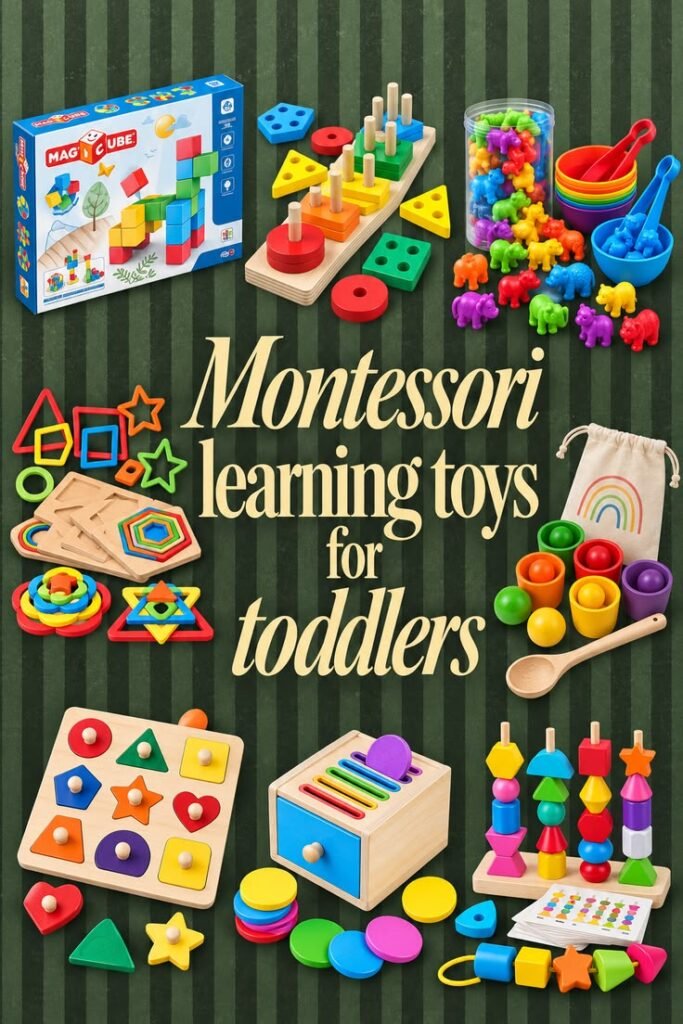
You want to give your child toys that teach something real, but the market is crowded. Colorful plastic items with flashing lights fill the shelves, and many sellers now attach the word “Montessori” to almost anything. How do you know what is genuinely useful?
Nexora Mart is your trusted destination for Online Shopping in Pakistan, offering quality toys, home appliances, energy-saving fans, and everyday products at competitive prices.
This guide explains what Montessori learning toys in Pakistan really are, which ones suit each age, how to buy them wisely, and how to make some at home with items you already own. By the end, you will know exactly what to look for and what to skip.
What Are Montessori Learning Toys?
Montessori learning toys are simple, hands-on materials that help a child learn by doing. They follow the ideas of Dr. Maria Montessori, an Italian educator who believed children learn best when they explore real objects at their own pace.
The short answer: a good Montessori toy has one clear purpose, is made of natural or sturdy materials, and lets the child discover the result alone. A set of wooden rings that stack on a post is a classic example. The child sees whether the rings fit, corrects mistakes without an adult, and builds concentration along the way.
These toys are usually quiet. They do not sing, blink, or give answers. This is deliberate. When a toy does less, the child does more.
Why Parents in Pakistan Are Choosing Montessori Toys
Many families here want early learning that does not depend on screens. Montessori toys offer a practical alternative. They build fine motor skills, patience, and focus through play, and they fit well with how children already behave at home: touching, sorting, pouring, and stacking.
There is also a cultural fit. Pakistani homes often have children of different ages playing together, and simple materials work across a wide range of abilities. A toddler may stack blocks while an older sibling uses the same blocks to count and build patterns.
It is worth being honest about limits. A toy cannot replace conversation, reading together, or time with caring adults. Montessori materials support development, but they do not guarantee faster learning or better grades. Think of them as helpful tools, not magic.
Best Montessori Toys by Age
Choosing by age matters more than choosing by popularity. A toy that is too hard frustrates a child, and one that is too easy gets ignored.
Babies from Birth to 12 Months
At this stage, babies learn through their senses. Soft fabric balls, wooden rattles, simple grasping rings, and high-contrast cards suit them well. Choose items small enough to hold but large enough that they cannot be swallowed. A basket of safe household objects, such as a wooden spoon or a cloth napkin, can interest a baby as much as a store-bought toy.
Toddlers from 1 to 3 Years
This is the age when Montessori toys become most useful. Object permanence boxes, where a ball drops into a hole and rolls out, teach cause and effect. Stacking rings, large knobbed puzzles, shape sorters, and chunky wooden blocks build hand control. Lacing beads and simple threading cards also help, as long as an adult watches closely.
Toddlers love to copy adults. Child-sized brooms, small pouring jugs, and a little sponge for wiping tables are part of the Montessori approach too, and they cost very little.
Preschoolers from 3 to 6 Years
Older children are ready for more detailed work. Number rods, sandpaper letters, counting beads, and puzzle maps support early math and reading readiness. Matching cards, buttoning frames, and basic sewing boards develop the hand strength needed for writing. Sorting by color, size, or shape is also a strong activity at this age.
How to Choose Safe, Quality Montessori Toys
Price and packaging do not tell you much. Look closely at the toy itself.
First, check the material. Solid wood with a smooth finish is common and lasts well. Run your hand over every edge. Splinters, rough corners, and peeling paint are warning signs. If a toy has a strong chemical smell, leave it.
Second, look at the size. Any piece small enough to fit inside a toilet paper tube can be a choking risk for children under three. This rule is simple, and it is worth following every time.
Third, think about purpose. Ask yourself what the child will learn from this toy. If you cannot answer in one sentence, the toy may be more decoration than education.
Fourth, be careful with the label. Not everything sold as “Montessori” follows the method. Some products are just wooden toys with a trendy name. Judge the toy by how it works, not by what the box says.
Where and How to Buy Montessori Toys in Pakistan
You will find these toys through local toy shops, school supply markets, handmade wooden toy makers, and online sellers across major cities such as Lahore, Karachi, and Islamabad. Local craftspeople often make solid wooden stackers and puzzles at fair prices, and buying from them can also support small businesses.
Before you order, ask a few simple questions. What wood or material is used? What paint or finish covers it? Can you see clear photos from several angles? When buying online, check the return policy, since photos can hide poor finishing.
A common mistake is buying a large set all at once. Children lose interest when they have too many choices. Start with three or four toys suited to their age, then rotate them every week or two. Store the rest out of sight. This keeps old toys feeling fresh and makes it easier for your child to focus.
Explore Montessori learning toys in Pakistan at Nexora Mart to encourage creativity, hands-on learning, and child development.
Another mistake is paying more for imported items when a local version does the same job. A wooden shape sorter made in Pakistan teaches the same lesson as an expensive foreign one.
Simple Montessori Activities You Can Make at Home
You do not need a big budget to follow the Montessori approach. Many effective activities use everyday items.
A bowl of dry lentils or rice and two small cups give a toddler a pouring and scooping activity. Always supervise, and avoid this with children who still put everything in their mouths. Clothes pegs and a card strip let a child practice pinching, which strengthens the fingers. Sorting buttons, spoons, or socks by color teaches categories. An old egg carton and some large pom-poms make a good sorting tray.
For a real-life example, imagine a mother in a small apartment who sets up one low shelf with a wooden puzzle, a basket of lacing beads, and a pouring jug. Her three-year-old chooses what to do, finishes it, and puts it back. The room stays tidy, and the child learns to take care of things. The shelf cost little, but the routine is what matters.
Frequently Asked Questions
Are Montessori toys worth the money?
They can be, if you choose well. A durable wooden toy often lasts through several children and holds its value, so the cost per use is low. Still, expensive does not always mean better, so compare quality before you pay.
At what age should I start Montessori toys?
You can begin in the first months with simple sensory items. Most families see the biggest benefit from around age one, when children can grasp, stack, and sort. Always match the toy to what your child can do now.
Can Montessori toys help my child get ready for school?
They can support skills that schools value, such as concentration, hand control, and early counting. They are one helpful part of a child’s growth, not a promise of results. Reading aloud and talking with your child matter just as much.
Do I need special training to use them?
No. Place the toy within reach, show your child once how it works, and then step back. Let them try, make mistakes, and repeat. Your calm attention is the most useful thing you can add.
Start Small and Watch Your Child
Montessori learning toys in Pakistan are easier to find than ever, but the best choice is rarely the fanciest one. Pick simple, safe items that match your child’s age, buy a few instead of many, and rotate them often. Local makers and household items can do much of the work.
Your next step is easy. Choose one activity from this guide, set it on a low shelf today, and spend ten minutes quietly watching how your child uses it. What you notice will tell you what to buy next.